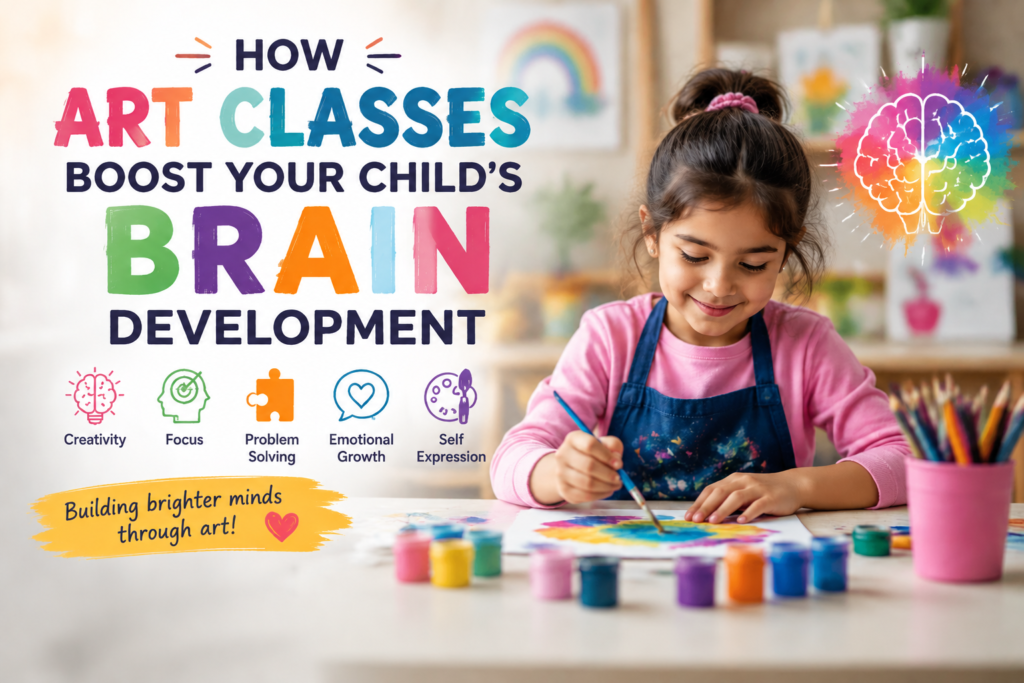
Every parent wants to give their child the best possible start in life, and while academics, sports, and music often top the list of priorities, one powerful tool for early development frequently gets overlooked: art. Enrolling your child in structured art classes does far more than teach them how to hold a paintbrush. It actively shapes the way their brain grows, helping them think more creatively, solve problems more effectively, and build the emotional resilience they’ll need throughout life.
If you’re a parent researching art classes for kids in Jersey City or nearby New Jersey communities, this guide will walk you through exactly how art education supports brain development at every stage of childhood, and why choosing the right school matters.
The Science Behind Art and Brain Development
Children’s brains are incredibly plastic during their early years, meaning new experiences literally reshape neural connections. When a child paints, draws, sculpts, or experiments with color and texture, multiple areas of the brain activate simultaneously; the visual cortex, motor skills regions, and areas responsible for emotional processing and decision-making all work together.
Research in developmental psychology has consistently shown that hands-on creative activities strengthen the connections between the brain’s two hemispheres. This cross-hemisphere communication is linked to improved problem-solving, better memory retention, and stronger language skills. In other words, art isn’t just a “fun extra” for kids; it’s a genuine cognitive workout.
Key Ways Art Classes Support Cognitive Growth
1. Improved Fine Motor Skills
Holding a pencil, mixing paint, cutting shapes, and shaping clay all require precise hand-eye coordination. Regular practice in art and painting classes in Jersey City style programs helps children refine these motor skills, which later support handwriting, typing, and other detailed tasks in the classroom.
2. Stronger Problem-Solving Abilities
Every piece of art starts with a challenge: how do I make this color? How do I represent depth on a flat page? How do I fix a mistake without starting over? Children who regularly face and solve these small creative problems develop a mindset that carries over into math, science, and everyday decision-making.
3. Enhanced Focus and Concentration
Completing an art project from start to finish requires sustained attention. Structured art painting classes in Jersey City and similar programs teach children to work through a process patiently, an ability that directly supports classroom learning and homework completion.
4. Better Emotional Regulation
Art gives children a nonverbal outlet to express feelings they may not yet have the vocabulary to describe. This emotional processing reduces anxiety, builds self-awareness, and helps kids develop healthier coping mechanisms, skills that support long-term mental wellbeing.
5. Boosted Memory and Observation Skills
Drawing from observation trains children to notice details, proportions, and patterns. This heightened observational skill strengthens memory retention, a benefit that extends well beyond the art room and into subjects like reading comprehension and science.
6. Increased Confidence and Self-Expression
There is no single “right” way to create art. When children see their unique ideas take physical form, it builds genuine self-esteem. This confidence often translates into a greater willingness to take on academic and social challenges.
Why Structured Classes Matter More Than Free Play
Doodling at home with crayons is wonderful, but structured art classes in Jersey City and beyond offer something home practice simply cannot: expert guidance, consistent skill-building, and exposure to a variety of mediums like drawing, painting, sculpture, and digital art. A qualified instructor knows how to introduce new techniques at the right pace, challenge a child appropriately, and provide constructive feedback that encourages growth rather than frustration.
Schools that follow a real curriculum, rather than simply keeping kids occupied for an hour, also track progress over time. Regular skill assessments allow parents to see tangible growth in their child’s technique, creativity, and confidence, insight that’s hard to get from unstructured art time at home.
What to Look for in a Quality Art Program
When searching for art classes for kids in Jersey City and the surrounding areas, consider the following:
- Experienced instructors who are practicing artists themselves, not just supervisors
- Age-appropriate curriculum that evolves as your child’s skills grow
- A variety of mediums, including drawing, painting, sculpture, and digital art
- Regular progress updates so you can see how your child is developing
- A supportive, encouraging environment where mistakes are treated as part of learning
- Opportunities for exhibition, so kids feel proud of their finished work
A program that checks all these boxes doesn’t just teach technical skill, it nurtures the whole child.
How Cre8sArt Supports Every Stage of a Child’s Creative Journey
This is exactly the philosophy behind Cre8sArt School. With a curriculum that exceeds national art education standards, Cre8sArt combines personalized projects with structured group lessons to build confidence, discipline, and creativity in students as young as three years old. Twice-yearly skill assessments keep parents informed of their child’s artistic progress, while weekly updates ensure families stay connected to what their child is learning.
Guided by professional artists with real teaching and exhibition experience, students at Cre8sArt don’t just learn technique, they build a genuine relationship with the creative process. Each year, students participate in a major art exhibition, giving them the chance to proudly showcase their work and build the kind of confidence that extends well beyond the studio. As an official chapter of the National Art Honor Society and National Junior Art Honor Society, Cre8sArt upholds high standards in art education, leadership, and community engagement.
Whether your child is just starting to explore color and shape or is ready to dive into more advanced painting techniques, Cre8sArt offers age-appropriate classes designed to grow with them, all while supporting the cognitive, emotional, and social development that structured art education provides.
Final Thoughts
Art is far more than a creative hobby, it’s a genuine engine for brain development. From fine motor skills and problem-solving to emotional regulation and self-confidence, the benefits of consistent, structured art education reach into nearly every corner of a child’s growth. If you’re exploring art classes in Jersey City or nearby New Jersey communities, look for a program that pairs skilled instructors with a real curriculum and a nurturing environment.
At Cre8sArt School, that’s exactly what your child will find, a place where imagination turns into reality, one brushstroke at a time. Ready to help your child grow through art? Contact Cre8sArt School today to learn more about our programs, schedule a trial class, or find the location that’s right for your family.
FAQ
At what age should a child start art classes?
Most experts recommend starting as early as age 3, when creative exploration supports early brain development.
How do art classes help with a child’s brain development?
Art activates multiple brain regions at once, boosting motor skills, memory, focus, and problem-solving abilities.
Are art classes only for kids who are naturally talented?
No, art classes benefit every child regardless of natural talent, since skills are built through consistent practice.
How often should my child attend art classes for real benefits?
Weekly structured classes offer the best results for steady cognitive and creative growth.
What mediums do kids typically learn in art classes?
Kids usually explore drawing, painting, sculpture, and digital art depending on the program.
Can art classes improve my child’s focus and academic performance?
Yes, the concentration and discipline built through art often carries over into schoolwork and studying habits.