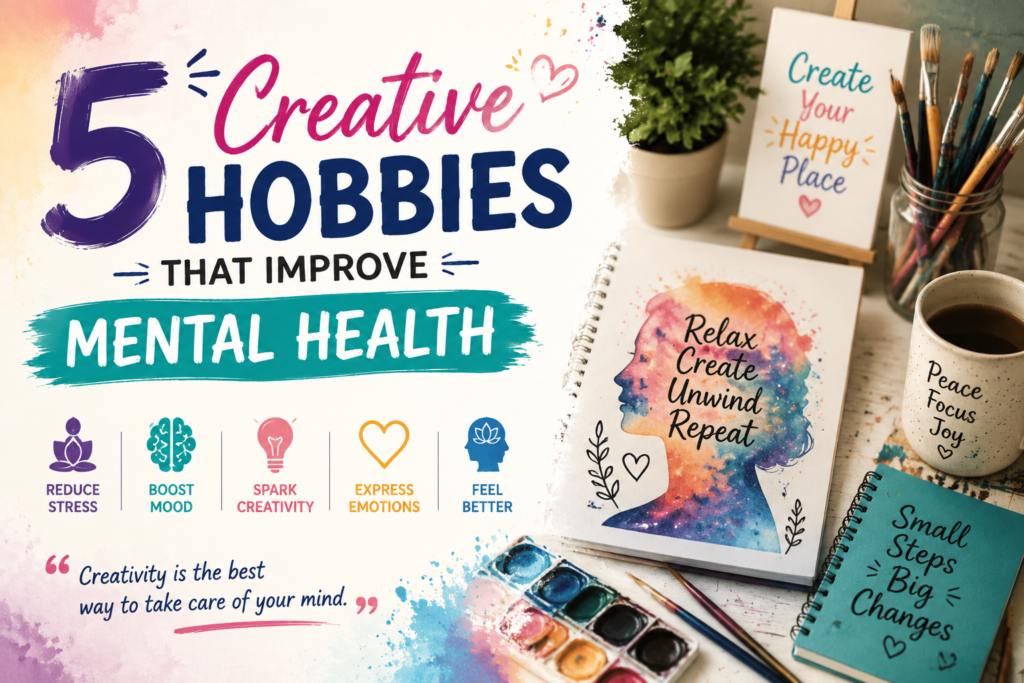
In a world that constantly demands our attention through screens, deadlines, and endless notifications, mental health has become one of the biggest priorities for people of all ages. While therapy, exercise, and sleep are often the first things that come to mind, one simple and enjoyable solution is frequently overlooked: creative hobbies.
Engaging in a creative activity on a regular basis can lower stress, improve mood, and give both kids and adults a healthy outlet for their emotions. Below, we explore five creative hobbies backed by real psychological benefits, and how picking up one of these practices could be exactly what your mental wellbeing needs.
1. Painting and Drawing
Painting and drawing are among the most accessible and effective creative outlets for mental health. The simple act of putting brush to canvas or pencil to paper requires focus, which naturally shifts the mind away from anxious or repetitive thoughts. This state of deep concentration is often compared to meditation, helping to lower cortisol levels and ease everyday stress.
Beyond relaxation, painting also builds a sense of accomplishment. Watching a blank page slowly transform into a finished piece boosts self-esteem and gives people, especially children and teens, a tangible reminder of their own capability. For those searching for art classes in Edgewater, joining a structured class rather than practicing alone adds the benefit of expert guidance, a supportive community, and steady skill growth over time.
2. Sculpting and Clay Work
There’s something deeply therapeutic about working with your hands. Sculpting and clay work engage the sense of touch in a way that flat mediums like drawing simply can’t. The tactile, hands-on nature of shaping clay has been shown to reduce anxiety and promote mindfulness, since it demands your full physical and mental presence in the moment.
Clay work is also an excellent hobby for people who struggle to express emotions verbally. Shaping a piece from start to finish provides a nonverbal way to process feelings, frustration, sadness, or excitement, all can be channeled into the material. Many students discover this benefit firsthand in structured art classes for kids in Edgewater, where clay and sculpture are introduced alongside other mediums in a guided, supportive setting.
3. Digital Art and Design
Not all creative hobbies require traditional supplies. Digital art has grown into one of the most popular creative outlets, especially among teens and young adults who are already comfortable with technology. Working on a tablet or computer to create illustrations, animations, or designs offers the same psychological benefits as traditional art: focus, flow, and a sense of accomplishment, while also building valuable technical skills.
For teenagers navigating the pressures of school, social life, and future planning, digital art can be a healthy escape that still feels relevant and modern. Enrolling in art classes for teens in Edgewater that include digital art options gives young people a space to decompress while developing skills that could even support future academic or career paths.
4. Mixed Media and Collage
Mixed media art, which combines painting, paper, fabric, found objects, and more, encourages a playful, low-pressure approach to creativity. Unlike more technical art forms, collage and mixed media don’t require “getting it right.” There are no strict rules, which makes this hobby particularly good for reducing perfectionism and self-criticism, two patterns often linked to anxiety and low self-esteem.
This freeform approach also sparks problem-solving and adaptability, since working with unconventional materials often means adjusting your vision as you go. For adults looking to unwind after a long workday, mixed media offers a relaxed, judgment-free way to reconnect with their creative side.
5. Structured Studio Classes for Adults
While independent, casual creativity has real value, there’s a unique mental health benefit that comes specifically from structured, in-person classes: community. Isolation is one of the biggest contributors to poor mental health, and creative classes provide a natural, low-pressure environment to connect with others who share similar interests.
Adult art classes in Edgewater give grown-ups a rare opportunity to step away from work and family responsibilities and reconnect with a hobby purely for the joy of it. Whether it’s painting, drawing, or mixed media, dedicating even one evening a week to a creative practice has been shown to reduce symptoms of stress and burnout while improving overall life satisfaction.
Why Structured Classes Make a Bigger Difference
Picking up a paintbrush at home is a great start, but structured classes offer benefits that solo practice can’t replicate. Expert instructors help beginners build real technique instead of getting stuck or frustrated, which keeps motivation high. A class setting also provides consistency, showing up weekly builds a habit, and habits are what create lasting mental health benefits rather than occasional, short-lived relief.
At Cre8sArt, this philosophy is at the core of every class offered. With a curriculum that blends structured lessons with personalized creative projects, students of all ages are guided by professional artists who understand how to nurture both skill and emotional wellbeing. Whether your child is just starting out, your teenager needs a healthy creative outlet, or you’re an adult looking to reconnect with your creative side, there’s a class designed to meet you where you are.
Cre8sArt’s welcoming studio environment, combined with regular progress updates and a genuine focus on growth, makes it easy to build a consistent creative habit, one of the most reliable ways to support long-term mental health.
Final Thoughts
Creative hobbies aren’t just a fun way to pass the time—they’re a legitimate, research-backed tool for improving mental health. From painting and sculpting to digital art and mixed media, each of these practices offers a unique way to reduce stress, process emotions, and build confidence.
If you’re ready to explore what a creative hobby could do for your mental wellbeing—or your child’s—a structured class is one of the best places to start. With expert instructors, a supportive community, and programs for every age group, Cre8sArt makes it easy to turn creativity into a lasting part of your routine.
Ready to get started? Contact Cre8sArt School today to learn more about our art programs, book a trial class, or find the location nearest you. Let your creative journey begin with us!
FAQs
Q1. Can creative hobbies really improve mental health?
Yes, creative hobbies like painting and sculpting are proven to reduce stress and improve overall mood.
Q2. Which creative hobby is best for reducing anxiety?
Painting and clay work are especially effective since both encourage mindfulness and present-moment focus.
Q3. Are art classes helpful for teenagers dealing with stress?
Yes, art classes give teens a healthy, judgment-free outlet to process emotions and unwind.
Q4. Do adults benefit from taking art classes too?
Absolutely, adult art classes help reduce burnout and create a sense of community outside of work life.
Q5. Is prior art experience required to join a class?
No, art classes welcome complete beginners as well as experienced students of all skill levels.
Q6. How often should someone practice a creative hobby for real benefits?
Practicing weekly through a structured class builds the consistency needed for lasting mental health benefits.