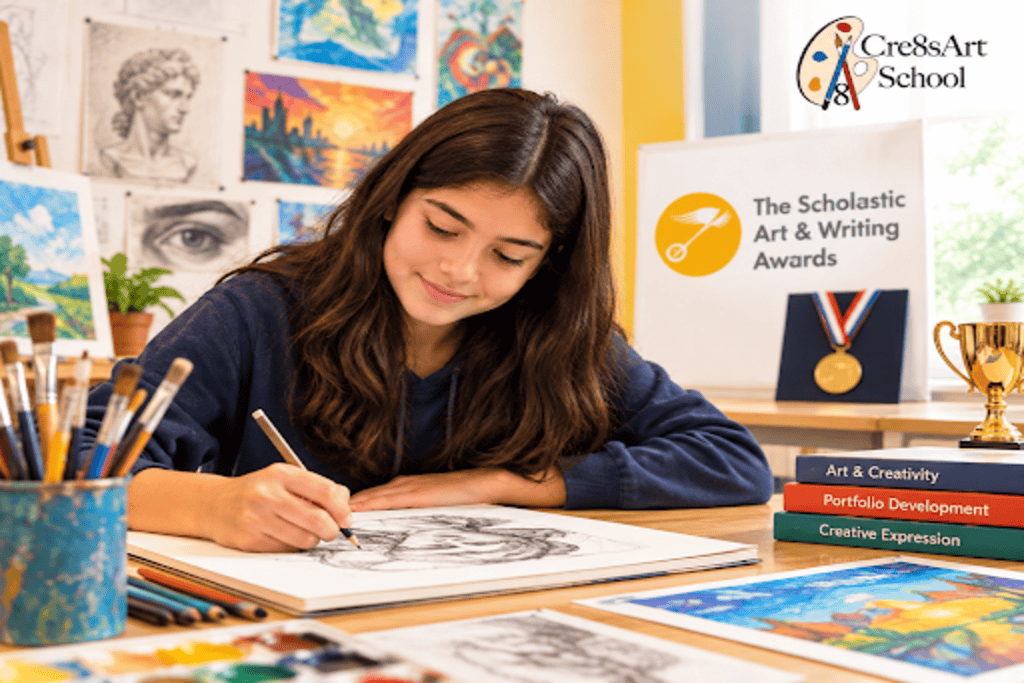
Students often have creative ideas they want to express through drawings, paintings, stories, and other forms of art. However, turning those ideas into a finished piece requires practice, patience, and the ability to communicate a clear message. The Scholastic Art & Writing Awards give students an opportunity to share their creative work and receive recognition for their efforts.
Taking art classes can help young artists develop their skills, explore different techniques, and prepare thoughtful submissions. With guidance from experienced instructors, students can learn how to turn their initial ideas into original artwork while building confidence in their creative abilities.
Understanding the Scholastic Art & Writing Awards
The Scholastic Art & Writing Awards recognize creative achievements by students in grades 7–12. The program includes visual art and writing categories, giving students opportunities to submit work that reflects their interests, experiences, and imagination.
Students may explore different approaches to drawing, painting, photography, mixed media, poetry, and other creative disciplines. Awards are based on the work submitted, making originality, personal expression, and thoughtful execution important considerations.
Preparing for the competition is also a valuable learning experience. Students can discover their artistic strengths, experiment with unfamiliar methods, and learn how to develop an idea into a complete project.
1. Building Strong Artistic Foundations
A creative idea is a great starting point, but students also need technical skills to bring it to life. Art classes introduce essential concepts such as proportion, shading, perspective, color theory, composition, and the use of different materials.
Through guided exercises and regular practice, students learn how to create more detailed and balanced artwork. These foundations can help them communicate their ideas more clearly and make deliberate artistic choices.
For families seeking art classes for kids in Hoboken, structured lessons can provide children with a supportive environment to explore their interests. Instructors can help students identify areas for improvement while encouraging them to develop an individual artistic style.
2. Exploring Different Mediums and Techniques
Students may have a preferred way of creating art, but experimenting with different mediums can open up new possibilities. Pencil drawing, watercolor, acrylic painting, charcoal, and mixed media each offer different ways to communicate an idea.
For example, a student interested in nature might use watercolor to capture soft colors or detailed pencil work to illustrate textures. Trying different approaches helps students discover which materials best suit their creative vision.
Enrolling in art painting classes in Jersey City can give students opportunities to practice painting techniques, understand color relationships, and create more developed compositions. These experiences can help them decide how to approach an original submission rather than simply copying a reference image.
3. Developing Original Ideas and Creative Thinking
Originality is an important part of creating meaningful artwork. Students should think beyond familiar subjects and consider how their personal experiences, interests, and observations can inspire a unique project.
Art instructors can encourage students to brainstorm ideas, make preliminary sketches, experiment with compositions, and revise their work. This process teaches them that a strong final piece often develops through several stages rather than appearing perfectly formed on the first attempt.
Students interested in the best drawing courses in Hawthorne can benefit from lessons that combine technical instruction with opportunities for independent exploration. The goal is not to make every student create the same type of artwork, but to help each one express ideas in a personal and thoughtful way.
4. Improving Confidence Through Practice and Feedback
Preparing artwork for a competition can feel challenging, especially for students who are sharing their work publicly for the first time. Regular practice helps them become more comfortable with their abilities and learn how to handle constructive feedback.
An instructor can point out areas that need attention, such as composition, contrast, or the balance between different elements. Students can then revise their projects and understand how small changes can improve the overall result.
The process also teaches patience and problem-solving. Rather than giving up when a drawing or painting does not turn out as expected, students learn to experiment with solutions and keep developing their ideas.
5. Connecting Visual Art With the Writing Awards
Creative expression is not limited to visual artwork. The Writing Awards provide opportunities for students to share personal experiences, imaginative stories, poetry, and essays.
Art and writing can complement one another. For example, a student might develop a visual series around a personal memory and write a statement explaining the ideas behind it. Another student may use drawing to explore characters or settings before developing a story.
Although art classes primarily focus on visual skills, they can encourage observation, storytelling, and thoughtful communication. Students should also explore writing-specific guidance if they plan to submit work to the Writing Awards.
6. Preparing a Strong and Original Submission
Before entering the Scholastic Awards, students should review the official category requirements and make sure their work fits the selected category. They should also check the submission format, image quality requirements, deadlines, and any regional instructions.
Originality matters. Students should develop their own ideas rather than reproduce existing artwork. Keeping sketches, drafts, and photographs of work in progress can help document their creative process.
The official awards guidelines identify originality, skill, and the development of a personal voice or vision as important judging considerations.
Help Your Child Develop Their Creative Skills
The right learning environment can help students build artistic foundations, explore new mediums, and become more confident in expressing their ideas. Whether a child enjoys drawing, painting, or experimenting with mixed media, consistent practice can make the creative process more rewarding.
At Cre8sArt, families can explore art education opportunities that support creative growth and skill development. Visit the Scholastic Art & Writing Awards to learn more and discover how art education can support your child’s creative journey.
FAQs
1. What are the Scholastic Art & Writing Awards?
The Scholastic Art & Writing Awards are a national recognition program for eligible students in grades 7–12. Students can submit original work across various visual art and writing categories.
2. Can art classes help students prepare for the Scholastic Awards?
Yes. Art classes can help students develop drawing and painting techniques, experiment with different materials, refine original ideas, and learn how to improve their work through feedback and practice.
3. What should students focus on when creating award submissions?
Students should focus on originality, technical skill, and personal expression. They should also review the official category requirements and ensure their work meets the submission guidelines.
4. Where can families find art classes for kids in Hoboken or Jersey City?
Families can explore local art education programs that offer age-appropriate instruction in drawing, painting, and other visual art techniques. Look for classes that encourage independent ideas alongside technical development.
5. Can students submit both artwork and writing?
Eligible students can submit work in art and writing categories, subject to the applicable entry rules. Students should review the official Scholastic Awards categories and regional deadlines before submitting.